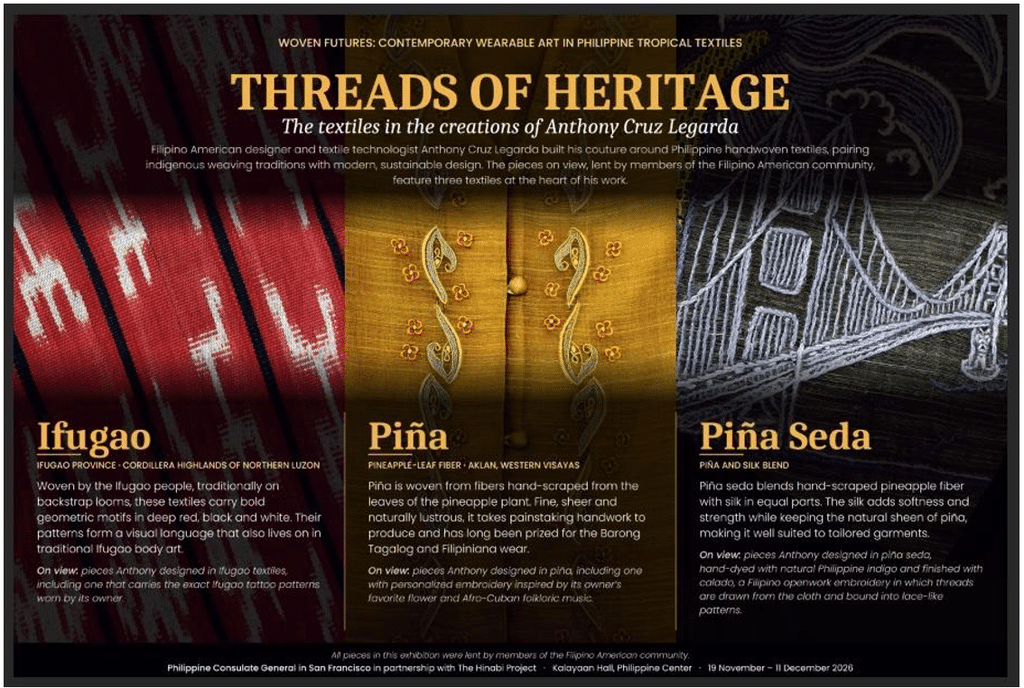
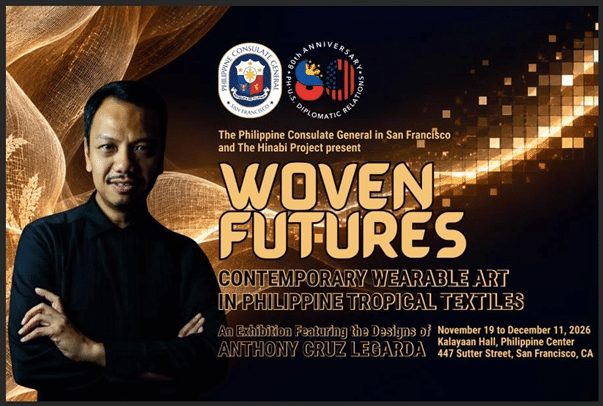
SAN FRANCISCO, CALIFORNIA – The Philippine Consulate General in San Francisco, with The Hinabi Project, opened “Woven Futures: Contemporary Wearable Art in Philippine Tropical Textiles” on 19 November 2026 at Kalayaan Hall, Philippine Center. The exhibition features a curated collection of wearable designs of the late Filipino American designer Anthony Cruz Legarda. GMA Network served as media partner.
Over forty (40) guests attended, including the designer’s friends and clients, community leaders and members of the Bay Area creative community, Philippine handwoven textile retailers and boutique owners, and creative entrepreneurs. The exhibition celebrates the enduring beauty of Philippine indigenous fibers and their transformation into contemporary wearable art that reflects innovation, sustainability, cultural identity, and economic opportunity. The sixteen (16) pieces on view range from piña and piña seda finished with calado to Ifugao-inspired designs, Ilocano inabel, and Maguindanaon inaul and Tausug pis siyabit. Most were lent by the Filipino Americans for whom they were made.
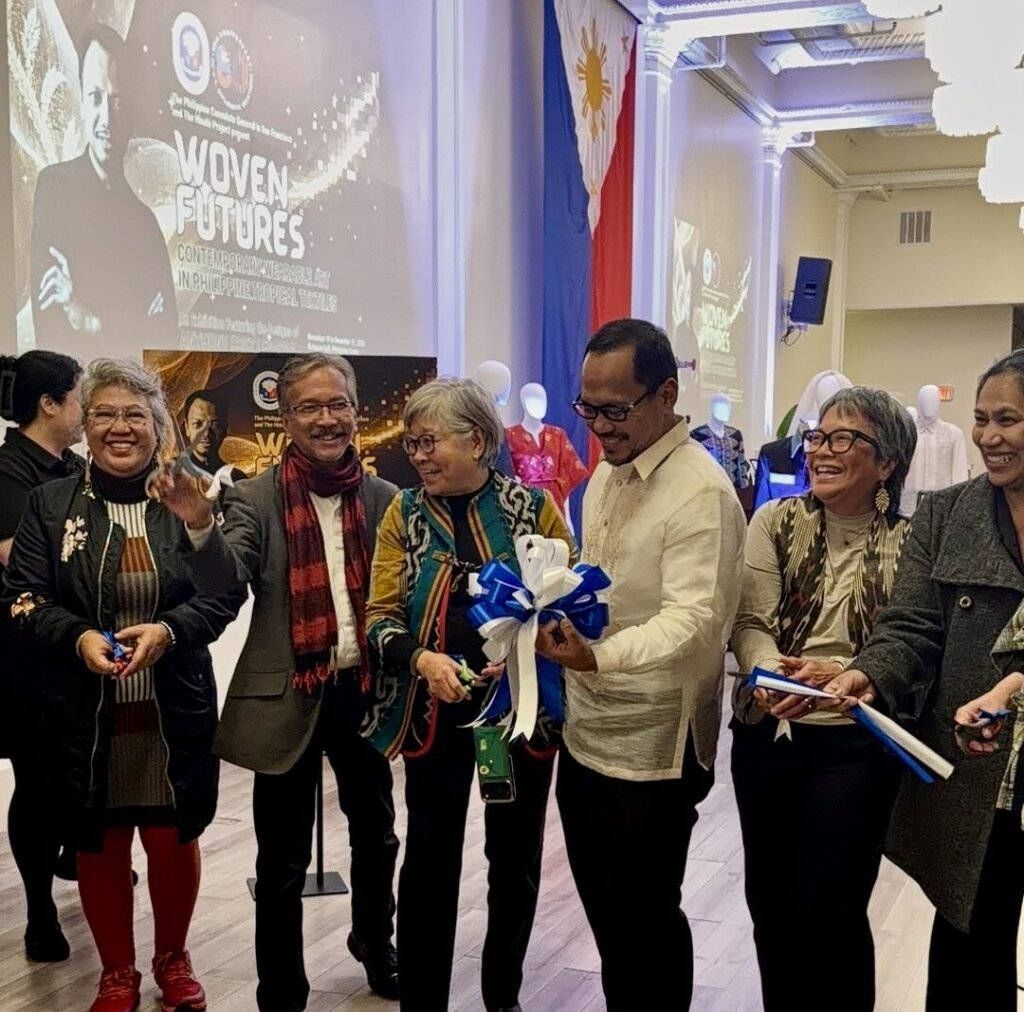
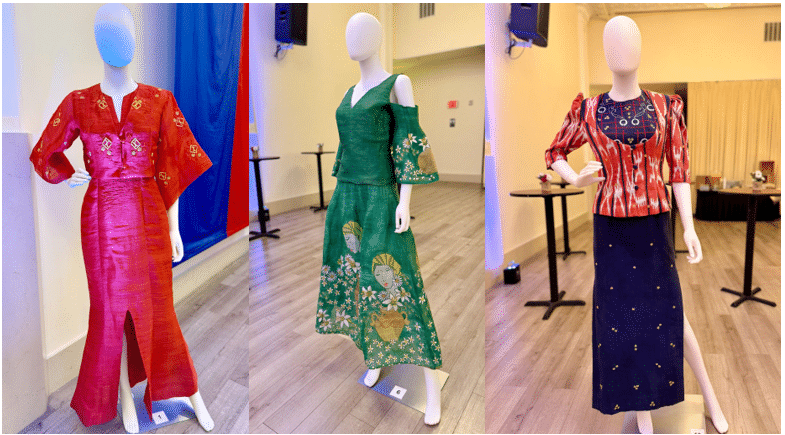
Top photo: Consul General G. Talisayon (fourth from left), The Hinabi Project co-founder Edwin Lozada (second from left) and members of The Hinabi Project board cut the ribbon to open “Woven Futures” at Kalayaan Hall. Below photo: Gowns made from Piña and Ifugao Philippine textiles on display. (San Francisco PCG photos)
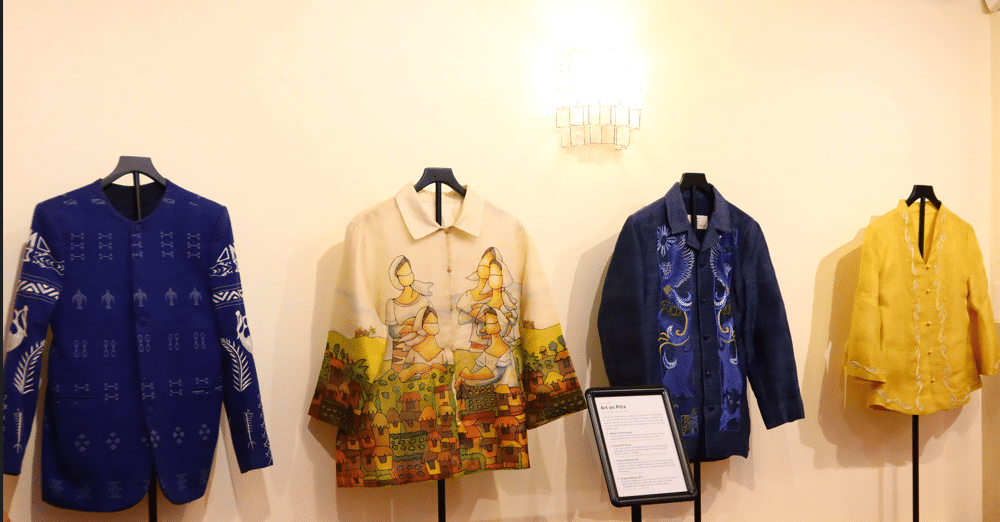
Painted piña pieces in the “Art on Piña” section of the exhibition. (San Francisco PCG photo)
In his welcome remarks, Consul General Arnel G. Talisayon thanked The Hinabi Project and the lenders, and described Philippine handwoven textiles as both heritage and world-class material for contemporary fashion, linking the exhibition to the Consulate’s economic diplomacy work. Consul Rowena Pangilinan-Daquipil presented a briefer on the industry, noting rising global demand for Philippine weaves and the work of the Department of Science and Technology – Philippine Textile Research Institute (DOST-PTRI) on natural dyes and piña seda. Handwoven textiles support over 5,200 weavers in some 481 communities, most of them women. She encouraged Bay Area sellers to know the weavers behind each piece, pay fairly and tell each piece’s story.
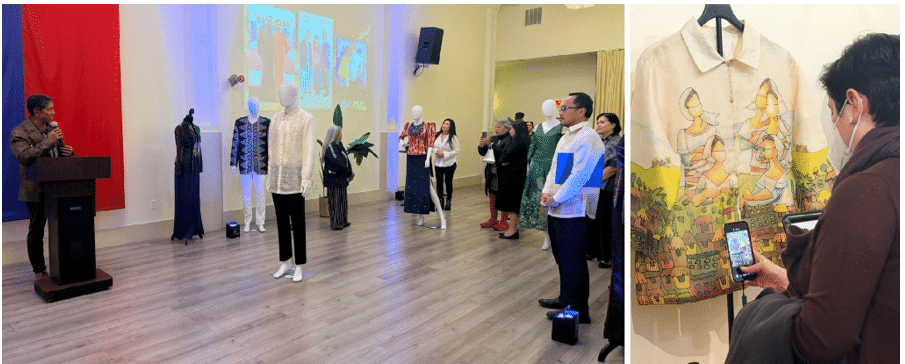
Guests view the pieces on display at Kalayaan Hall, Philippine Center. (San Francisco PCG photos)
Six lenders then shared the stories behind their pieces: Dr. Erlinda Borromeo of the Autism Hearts Foundation, immigration lawyer Atty. Lourdes Tancinco, Filipino historian Mr. Mel Orpilla, Ms. Lisa Suguitan Melnick of The Hinabi Project, artist Mr. Abel Manalo and clinical social worker Ms. Joyce Vives. Their accounts ranged from painted piña made by neurodivergent artists to Ifugao tattoo motifs, personal embroidery and a piña wedding dress.
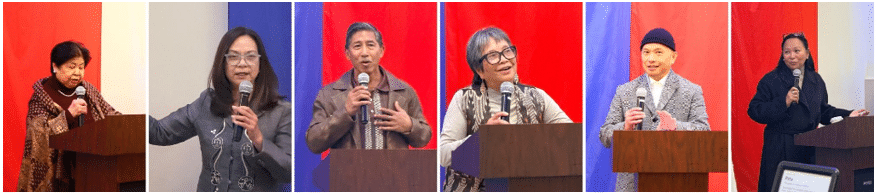
From left: Dr. Erlinda Borromeo, Atty. Lourdes Tancinco, Mr. Mel Orpilla, Ms. Lisa Suguitan Melnick, Mr. Abel Manalo and Ms. Joyce Vives share the stories behind the pieces they lent to the exhibition.
(San Francisco PCG photos)
Consul General Talisayon posthumously presented a plaque of recognition to Mr. Legarda, received on his behalf by The Hinabi Project co-founder Mr. Edwin Lozada.
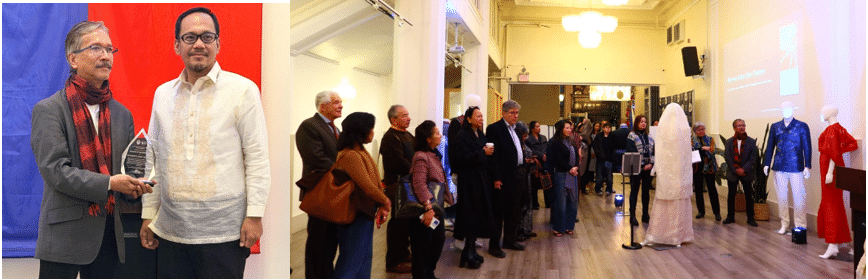
In closing, Mr. Lozada said that Mr. Legarda had “woven and sewn” the community together, and announced that The Hinabi Project will exhibit over thirty (30) of its commissioned pieces at the National Museum of the Philippines next year. “Woven Futures” is on view at Kalayaan Hall, Philippine Center, 447 Sutter Street, San Francisco, until 11 December 2026. END