
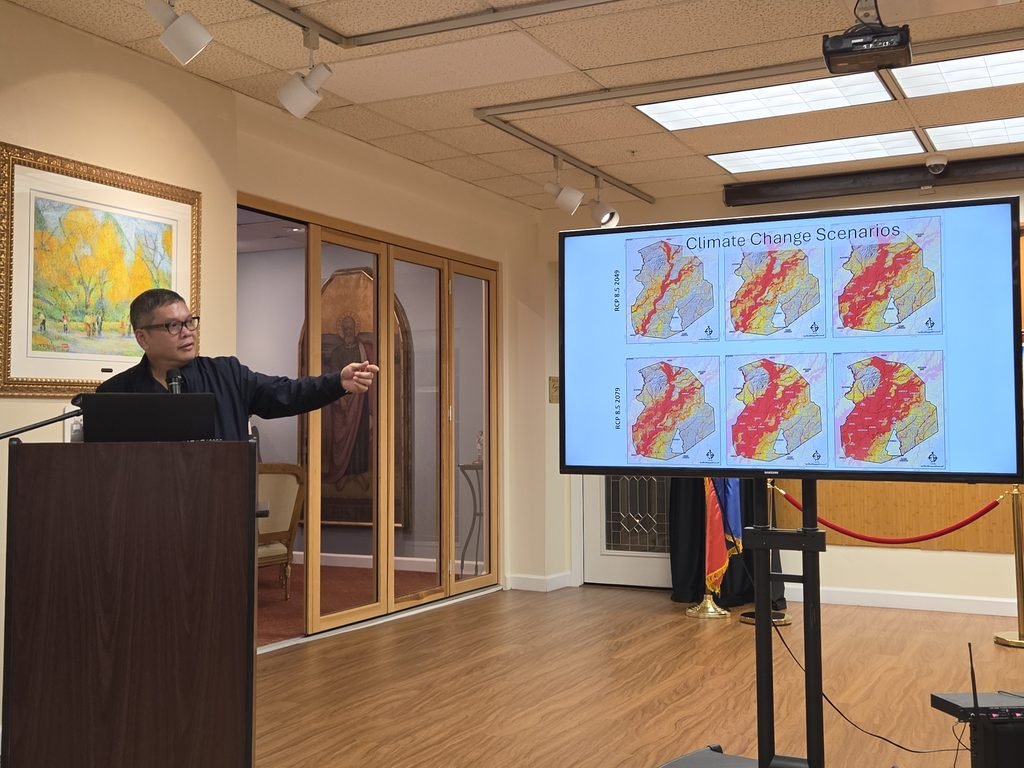
Dr. Mahar Lagmay discussing the use of scientific research as an instrument of statecraft and improving development plans for resilience to climate change (San Francisco PCG photo)
SAN FRANCISCO, CALIFORNIA – The Philippine Consulate General in San Francisco hosted a lecture titled Science, Statecraft, and National Resilience: Rethinking Governance in the Philippines by renowned Filipino scientist Dr. Alfredo Mahar Francisco A. Lagmay, highlighting the importance of science, technology, and evidence-based planning in strengthening disaster resilience in the Philippines.
Dr. Lagmay, Professor at the University of the Philippines National Institute of Geological Sciences (NIGS) and Executive Director of the UP Resilience Institute, is also known for leading Project NOAH (Nationwide Operational Assessment of Hazards), a pioneering Philippine initiative in disaster risk reduction.
During the lecture, Dr. Lagmay discussed how advanced technologies, including high-resolution hazard mapping, LiDAR mapping, and supercomputing, have improved the country’s ability to anticipate floods, landslides, storm surges, and other natural hazards.
He emphasized that effective disaster resilience requires integrating scientific risk assessments into land-use planning, infrastructure development, and public investment decisions, noting that disasters often reflect broader development challenges.
Dr. Lagmay also highlighted advances in probabilistic risk assessment and impact-based forecasting, which enable government agencies and communities to better anticipate disaster impacts and undertake preventive measures.
The lecture was followed by an interactive discussion on disaster preparedness, water security, community safety, and the role of scientific research in sustainable development. The discussion also featured Project NOAH’s newly launched Resilience Platform which provides timely and relevant information to support disaster prevention and response. The platform offers real-time data on flood, landslide, and storm surge hazards; climate risk maps of the Philippines to inform planning and reconstruction; and a Life and Conservation section showcasing the country’s rich biodiversity, including its forests, coral reefs, wildlife, and plant species. The activity provided an opportunity for the Consulate personnel and attached agencies to learn about Philippine scientific innovations and the importance of collaboration in building a more disaster-resilient Philippines. END
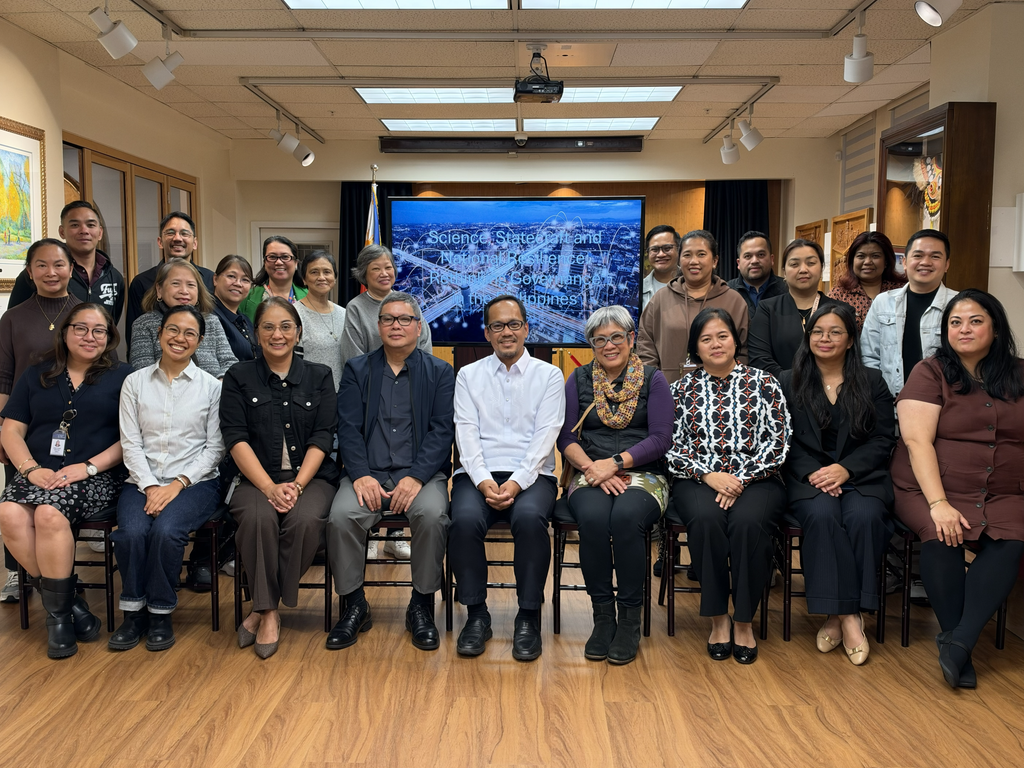
Consulate personnel and University of California, Berkeley’s Philippine Studies Program coordinators pose with Dr. Mahar Lagmay after the lecture on Science, Statecraft, and National Resilience: Rethinking Governance in the Philippines at the Sentro Rizal of the Philippine Center (San Francisco PCG photo)